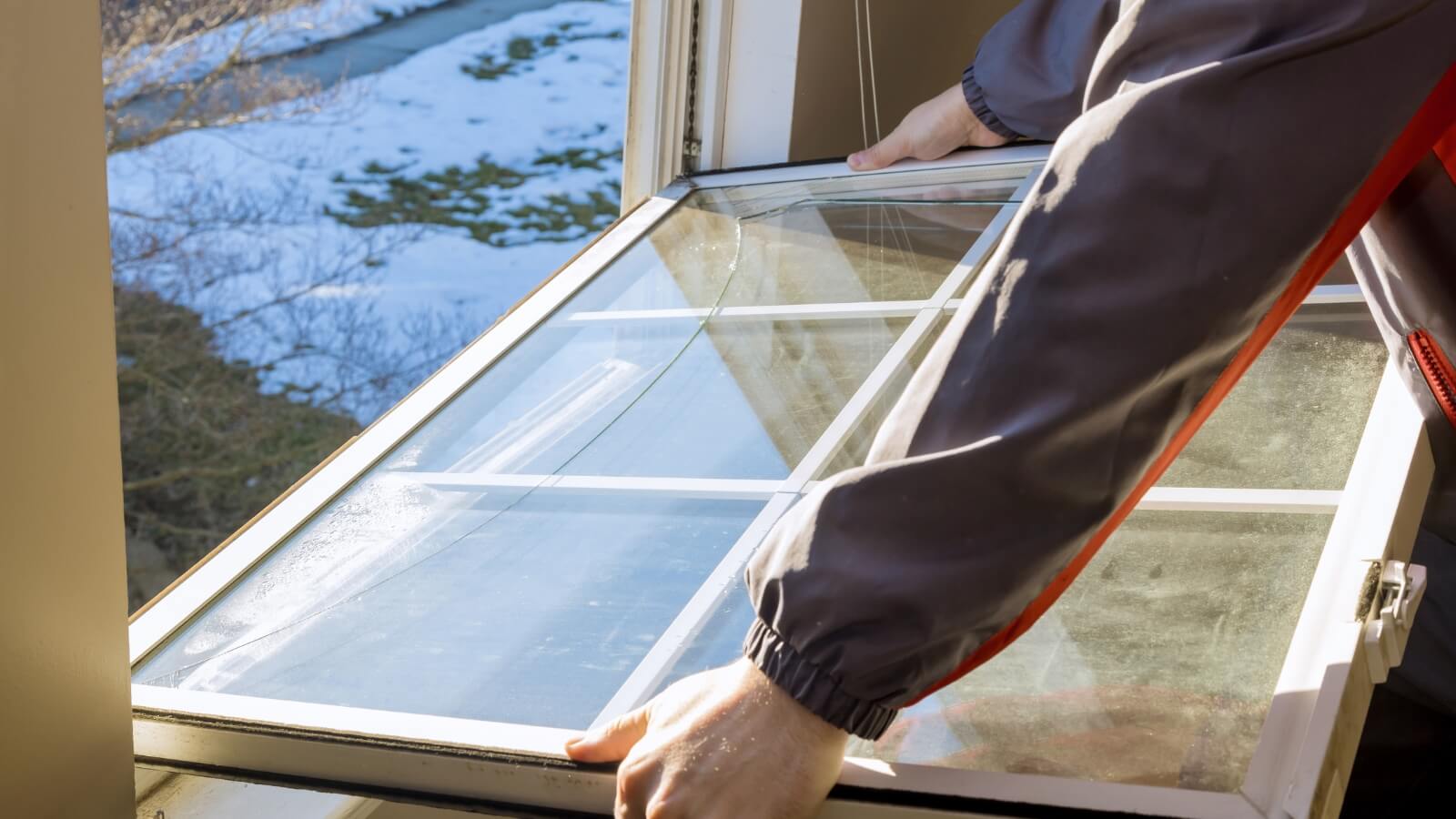
When the cold weather creeps in, you may notice chilly drafts of air sneaking through your outdated windows and doors. However, this discomfort isn’t something you need to put up with until you get them swapped out during warmer months.
Contrary to popular belief, November through February is actually a great time to start replacing windows and doors. Read on to learn exactly how they’re installed in the winter (so that the cold doesn’t come in) and what the many advantages are.
How Are Windows and Doors Installed Differently in the Winter?
A reputable contractor should install your windows and doors differently in the winter than they would in the spring, summer, or fall. That’s because window and door installations need to be done in a way that minimizes discomfort and protects the building materials.
Individual Replacements
In the winter months, most window and door replacements are done one at a time—meaning they’ll entirely remove and replace a window or door before moving on to the next one. That way, there are never multiple exposed openings to your home.
Quick Turnarounds
Just because windows and doors are installed one at a time doesn’t mean the process is slow. In most cases, several windows can still be installed in one day, guaranteeing a quick project wrap-up while still protecting the comfort of your home.
Cold Weather Materials & Methods
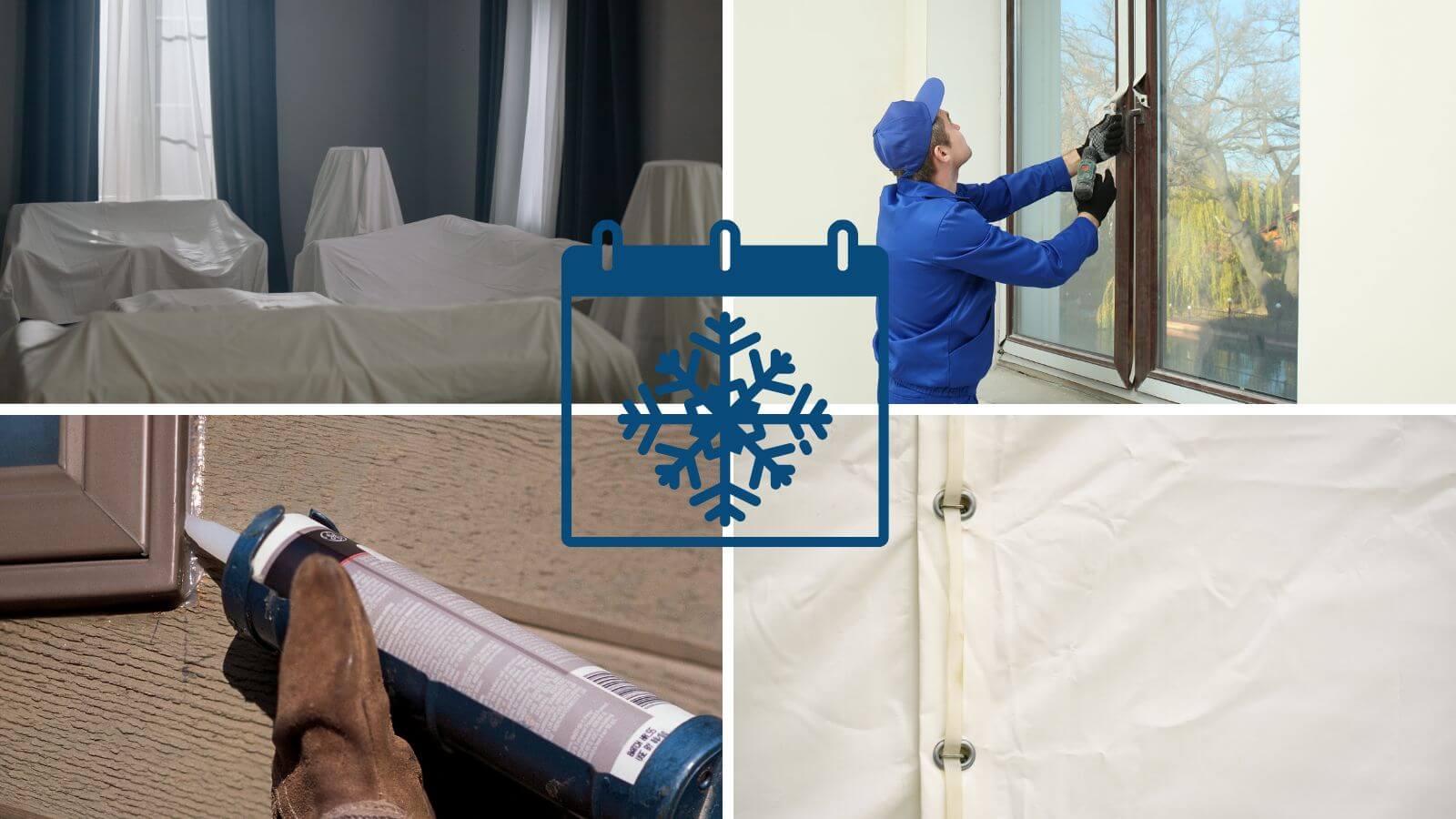
Because installation materials react differently in the cold, specific materials and methods designed for colder temperatures should be used. This includes (but isn’t limited to):
Winter-grade insulation foam: Foam that’s designed to properly cure in cold temperatures without over-expanding and warping the frame.
Cold-weather caulk: Caulk that is formulated to remain flexible and cure properly in low or sub-zero temperatures.
Frame warming: Because vinyl and composite frames can become brittle and crack in the cold, they’re warmed up indoors before being installed.
Sealed Entryways
To prevent the cold from leaking into your house during installation, any interior doors will be closed to stop outside airflow from circulating. If you don’t have any doors to close, or feel as though that won’t be enough to securely protect you from the elements, plastic floor-to-ceiling walls can also be erected to offer extra shelter.
Mess Minimization
Wintertime is messy—ice, snow, sleet, and salt can easily get tracked underfoot. To prevent debris from dirtying your home during an installation, drop cloths are typically used to cover the floor and furniture. Although there is almost always some form of cleaning required after a window or door installation, extra care will be taken to tidy up any messes accidentally brought in from the outside.
What Are the Advantages of Replacing Windows and Doors in the Winter?
Just because windows and doors can be replaced in the winter, does that mean they should? Well, there are actually numerous benefits to replacing your windows and doors in the winter months, including:
Faster scheduling: Because the winter months are slower (spring and summer are peak busy seasons for home renovations), there will be shorter wait times and more appointment dates available.
Quicker turnarounds: Since contractors have fewer installations scheduled during the off-season, your project will be prioritized, which likely means the project timeline will be shorter.
Easier draft detection: In the warmer months, it’s harder to pinpoint exactly which windows or doors have draft or leak problems, especially if a gap or crack is small. Cold weather makes weak spots easier to find and address.
Off-season discounts: Some contractors offer special promotions, lower rates, or sales during the winter months to keep work steady. Windows in the winter = money saved!
Immediate energy bill savings: Your steep energy bill is likely being caused by your outdated windows and doors. Getting them immediately replaced will help lower utility bills for the rest of the season (rather than waiting until next year).*
Prevents future issues: Because the cold weather makes window glass brittle and temperature fluctuations cause the frames to warp, windows are more prone to breakage in the winter. Replacing the windows early in the winter can prevent this from happening in later months.
What Are the Challenges of Replacing Windows or Doors in the Winter?
Installing windows and doors in the winter does come with challenges—but an experienced contractor will anticipate and prepare for any potential problems. Some challenges include:
- Unpredictable storms (leading to delays)
- Unsafe site conditions due to weather
- Shorter daylight hours
- Materials behaving differently in the cold
- Postponed exterior finishing work (painting and staining will need to be done in the spring when the weather is warmer)
How Standard Windows & Doors Can Help
Are you interested in upgrading your windows and doors this winter? Then contact Standard Windows & Doors today! We offer year-round window and door installation and replacement services that keep your comfort (and coziness) in mind.